
Why Wrist Blood Pressure Readings Can Be Accurate When a Real Cuff Is Used
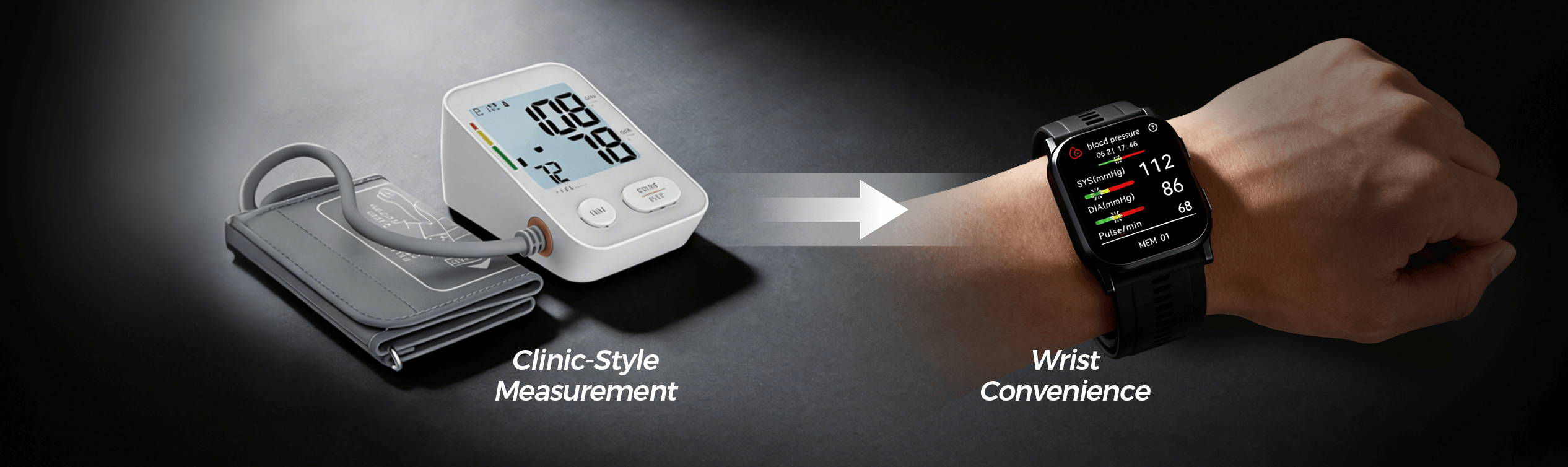
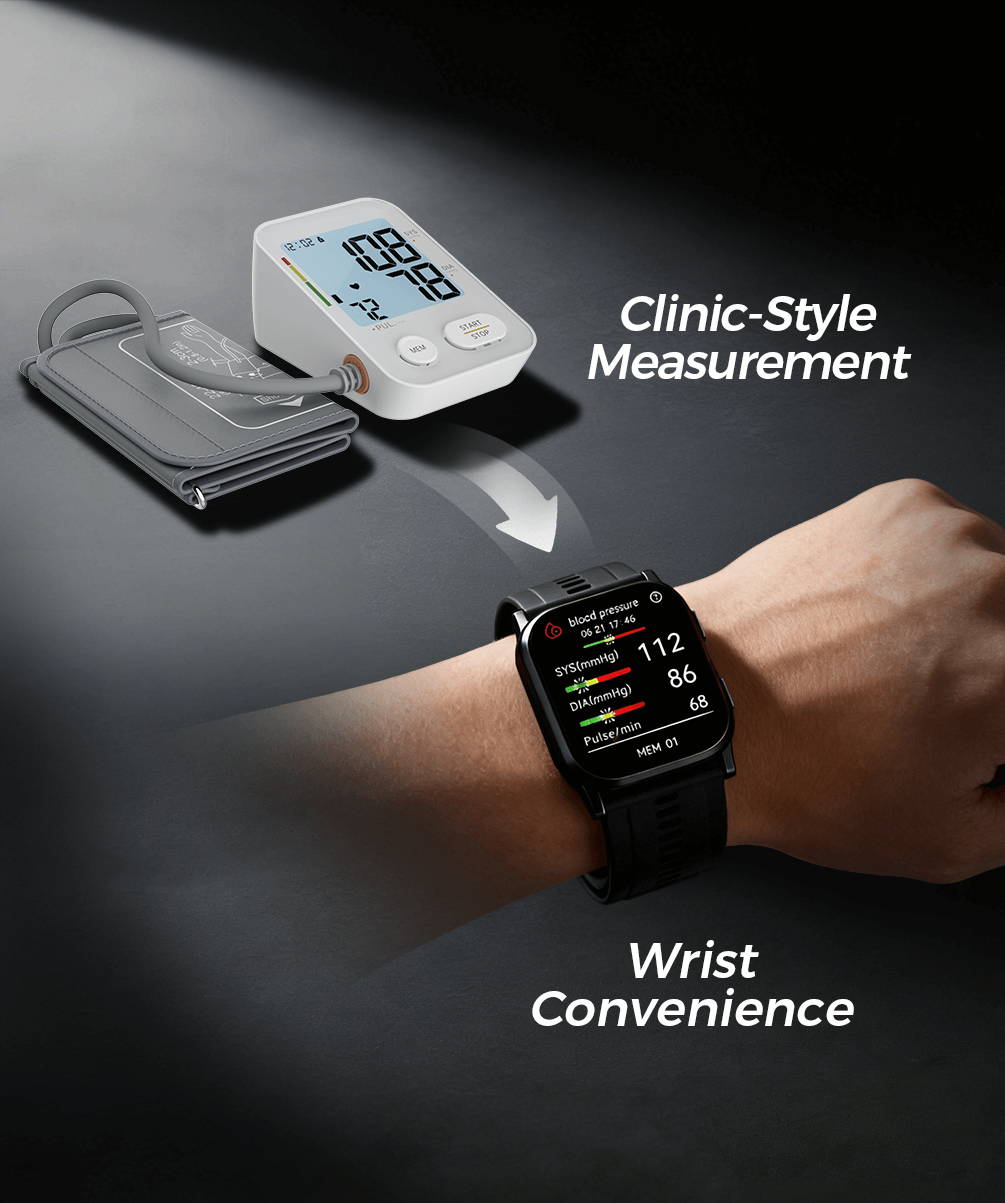
Why Wrist Blood Pressure Readings Can Be Accurate When a Real Cuff Is Used
Wrist blood pressure watches are often described as “inaccurate,” and in many cases, that reputation is understandable. A large number of wrist-based devices rely on indirect estimation methods that can be affected by skin tone, wrist position, and movement.
However, not all wrist blood pressure watches work the same way.
When a wrist blood pressure watch uses a real inflatable cuff and measures actual pressure changes, rather than estimating blood pressure from optical signals, accuracy can be clinically reliable. The key difference lies in how blood pressure is measured.
Understanding this distinction helps explain why some wrist blood pressure watches fall short, and why others are trusted for daily monitoring and trend tracking.
Why many wrist blood pressure watches are considered inaccurate?
Most wrist blood pressure watches on the market do not measure blood pressure directly. Instead, they rely on optical sensors and algorithms to estimate blood pressure based on pulse wave data and other indirect signals.
While this approach may be convenient, it introduces several limitations:
- The measurement is not based on real pressure
- Readings can be affected by skin tone, wrist anatomy, and motion
- Results often require frequent calibration against another blood pressure device
How medical-grade blood pressure is actually measured?
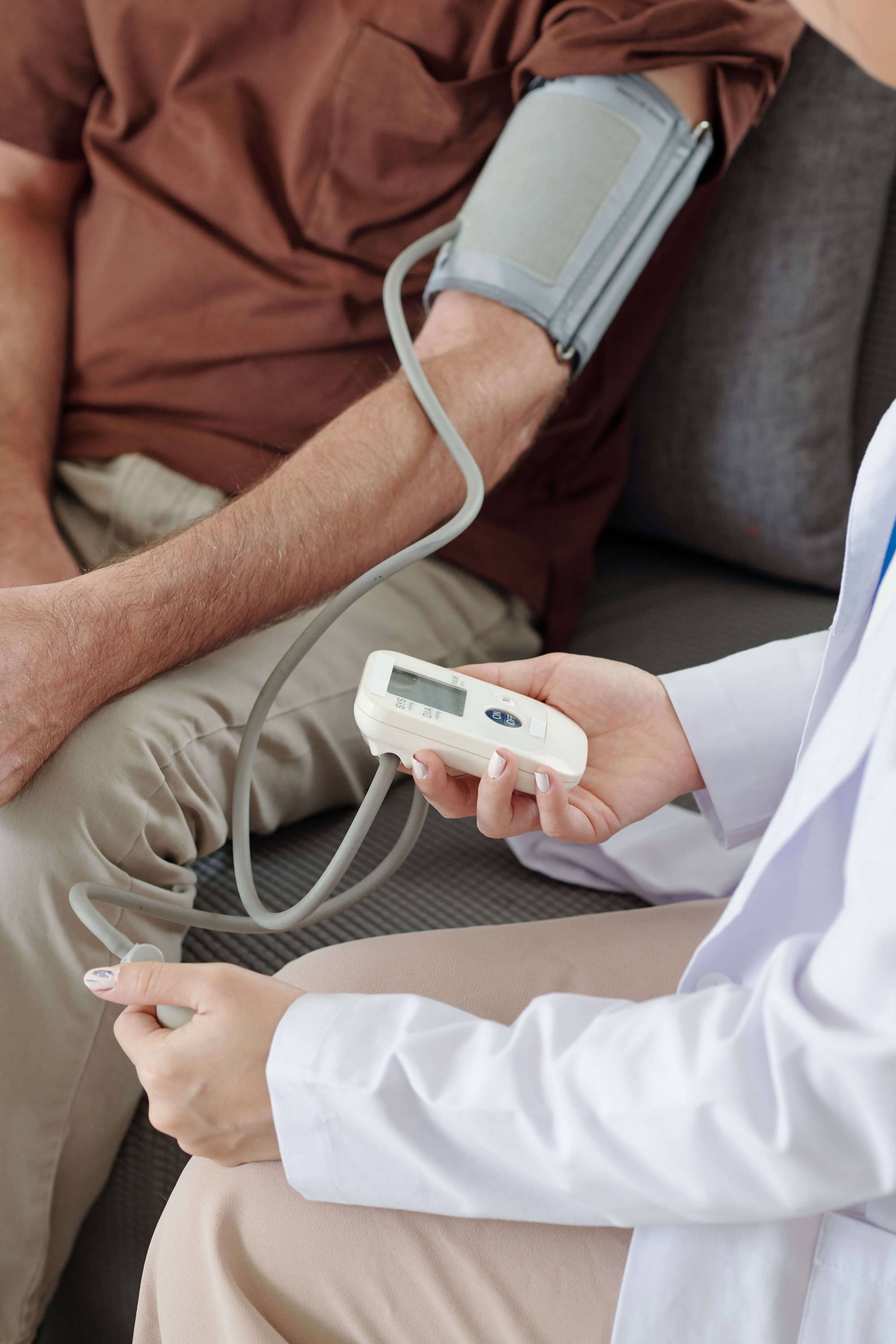
In clinical and home medical settings, blood pressure is measured using an inflatable cuff and an oscillometric method.
This process works by:
- Inflating a cuff to temporarily restrict blood flow
- Gradually deflating the cuff
- Detecting pressure oscillations caused by blood flow returning through the artery
These pressure oscillations are then used to calculate systolic and diastolic blood pressure values. Because the measurement is based on real pressure changes, this method is considered the clinical reference for non-invasive blood pressure monitoring.
This same principle is used in:
- Hospital blood pressure monitors
- Home upper-arm cuff blood pressure devices
- Validated wrist cuff blood pressure monitors
When this cuff-based, oscillometric method is applied correctly, wrist-based measurement can be both practical and accurate.
What makes wellue wrist blood pressure watch accurate?
Accuracy in a wrist blood pressure watch depends on whether it follows the same core principles used in clinical blood pressure measurement.
- A real inflatable cuff built into the band
The most important factor is the presence of a real inflatable cuff.
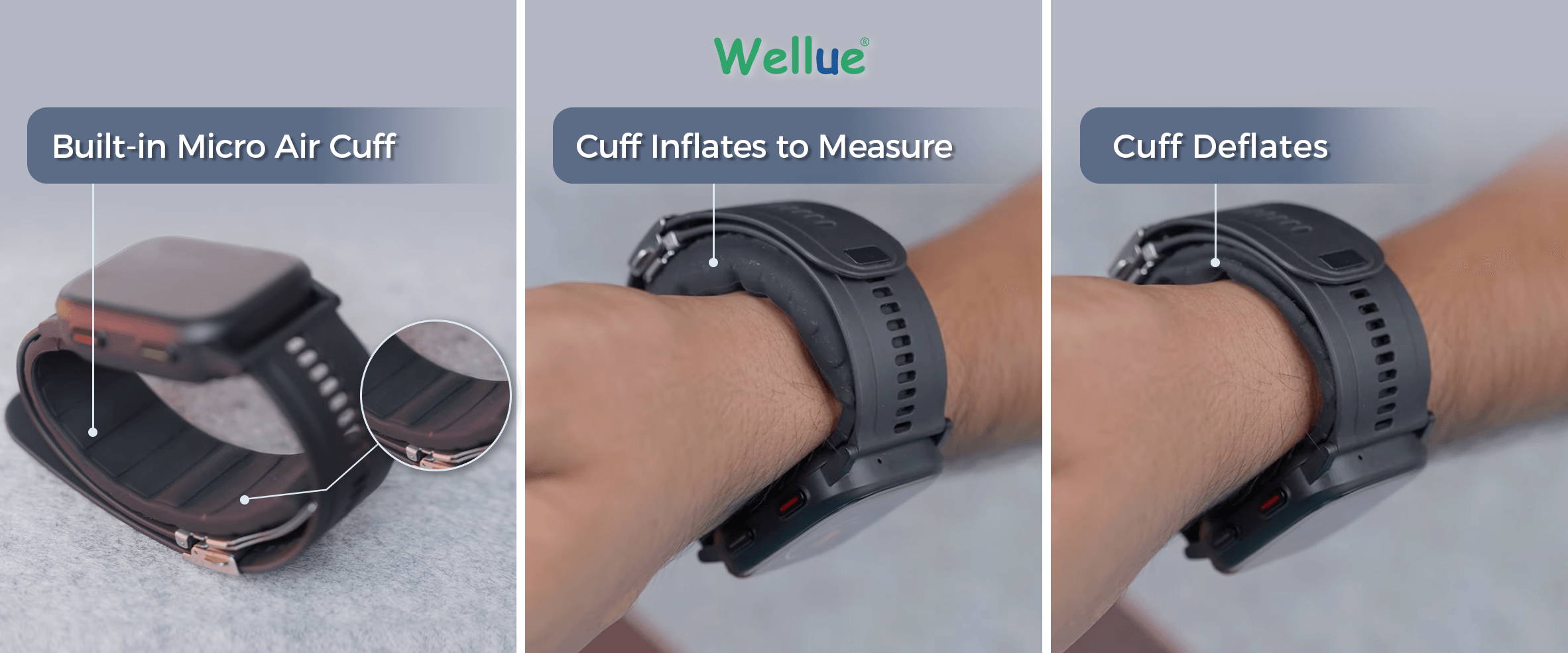
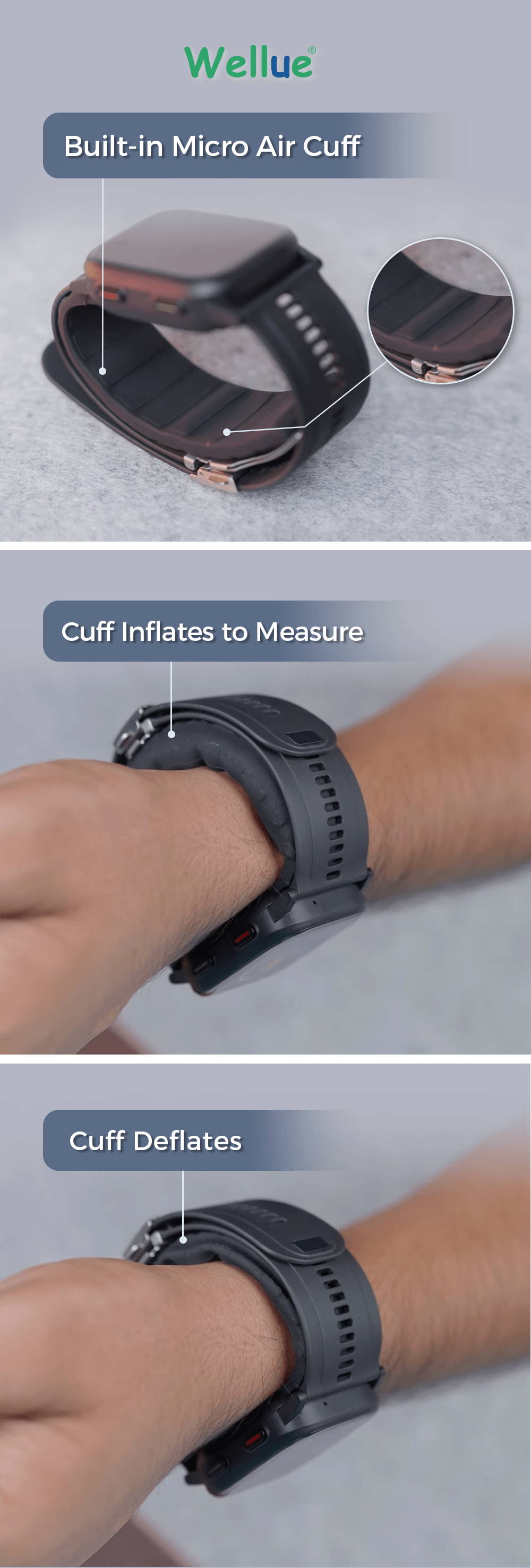
Some wrist blood pressure watches integrate a micro inflatable cuff directly into the watch band. During each measurement, the cuff gently inflates and deflates, applying controlled pressure to the wrist artery. This allows the device to measure actual pressure changes, rather than relying on estimation.
From a user perspective, this also creates a familiar experience. You can feel the cuff working, similar to a traditional blood pressure monitor, which helps build confidence in the measurement process.
- Oscillometric method, not optical estimation
Wrist blood pressure watches that use a real cuff also use the oscillometric method, the same measurement approach used by medical-grade devices.
This method:
- Measures real pressure oscillations
- Does not rely on skin color or optical signal interpretation
- Is widely accepted in clinical validation standards
By contrast, optical estimation methods infer blood pressure indirectly and are more sensitive to external variables. This is why cuff-based wrist blood pressure watches tend to deliver more consistent results across different users and environments.
- No Frequent Calibration Required
Because cuff-based wrist blood pressure watches measure real pressure changes, they typically do not require frequent calibration against another blood pressure monitor.
Many optical-based devices need regular recalibration to remain usable. A cuff-based approach reduces this dependency and makes daily monitoring more practical, especially for users who check their blood pressure regularly.
Accuracy Is Just the Start. Trends Tell the Whole Story.
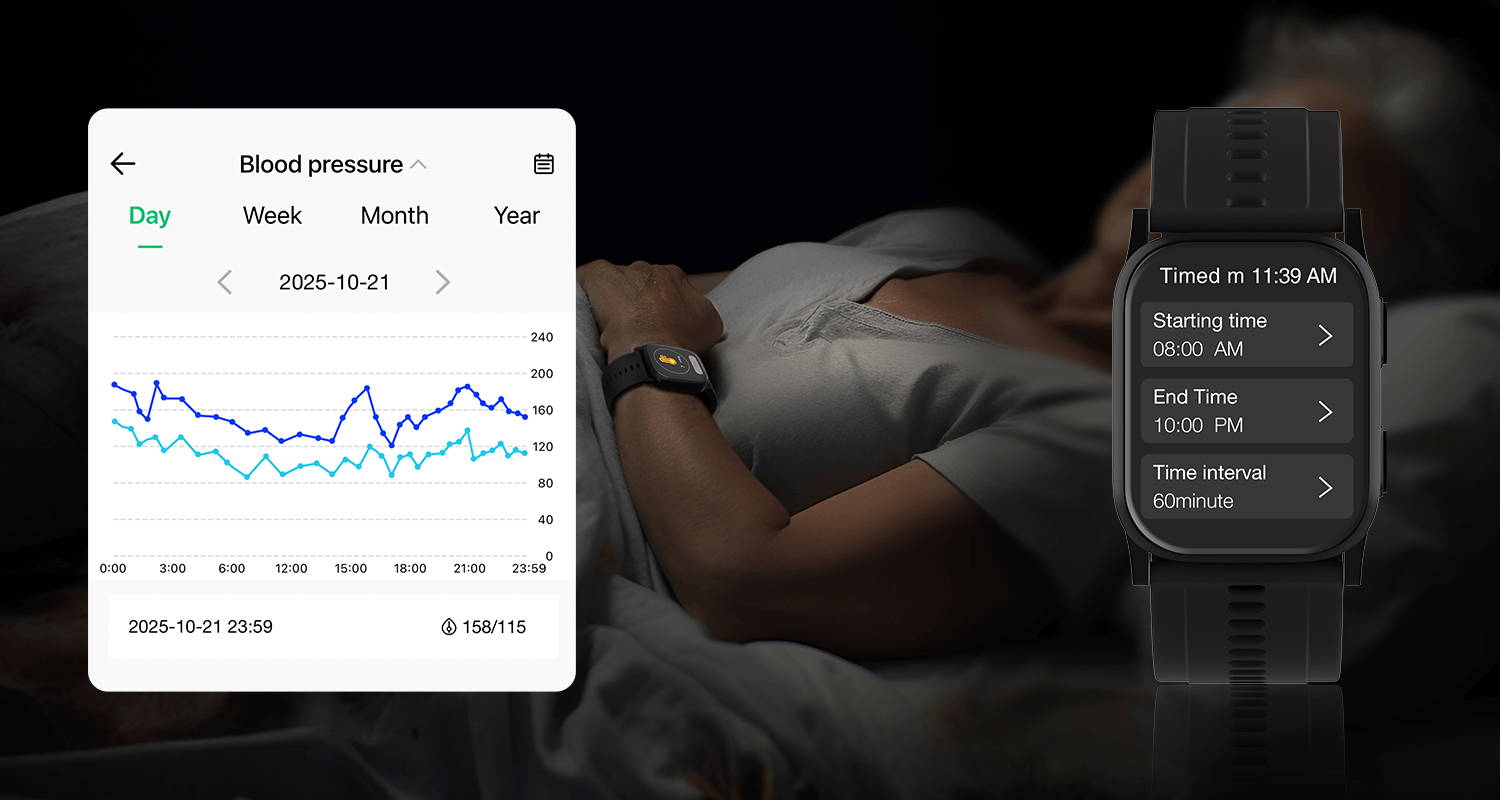
Accurate measurement is the foundation, but it’s not the full picture. Blood pressure naturally changes throughout the day, and a single reading only tells you what happened at one moment. Stress, caffeine, exercise, posture, sleep, and even when you take your medication can all shift your numbers.
That’s why the next step after accuracy is trend monitoring.
With Wellue’s wrist blood pressure watch, you’re not limited to occasional spot checks. It supports Timed Blood Pressure Measurement (TBPM), which lets the watch take readings automatically at set intervals (such as every 30, 60, 120, or 240 minutes). Instead of a couple of readings, you can build a fuller timeline of your day.
This higher “data density” helps you see patterns that one-time readings can miss, such as:
- Morning spikes after waking up
- Stress-related increases during busy hours
- Whether your blood pressure dips at night during sleep
- How your numbers change after coffee, meals, exercise, or medication
In other words, the goal isn’t just “What’s my blood pressure right now?” It’s “What does my blood pressure look like across the day?” That’s the kind of insight that makes tracking feel meaningful, and helps you make better decisions with your routine and your care plan.
For everyday monitoring, trends are often more useful than chasing perfect matches between different devices. Consistent measurements from the same watch, taken under similar conditions, can tell a clearer story over time.
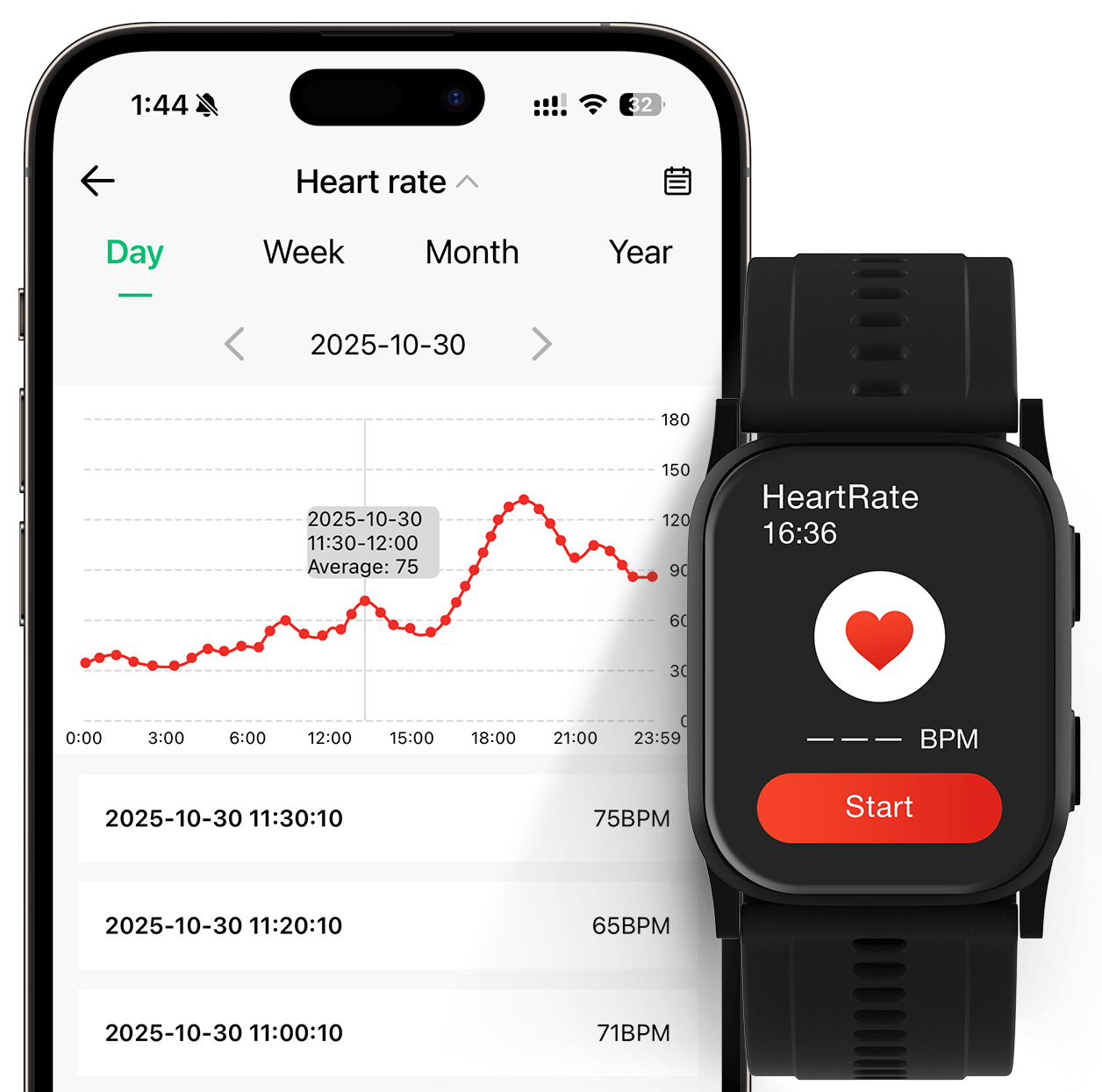
Auto Heart Rate Check at Custom Intervals
Related Products
Related Products