
Can Smartwatches Measure Blood Pressure Accurately? FDA-Cleared Explained
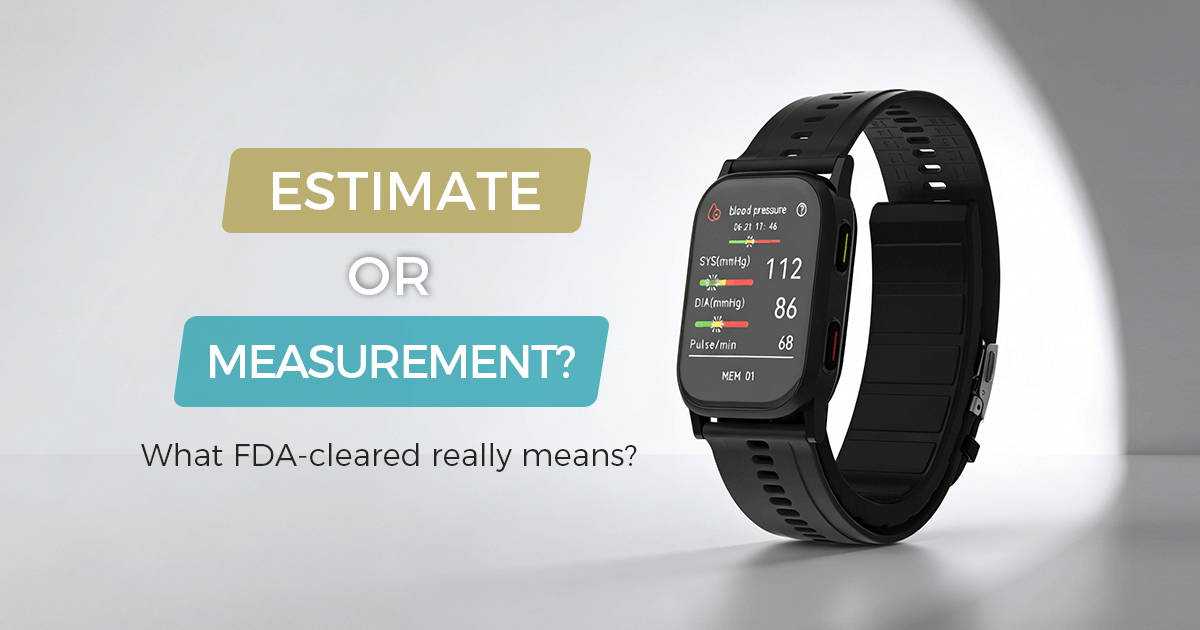
Can Smartwatches Measure Blood Pressure Accurately? What’s FDA-Cleared, What’s Not
Smartwatches today can track heart rate, sleep, stress levels, and in some cases, even display a blood pressure number.
But a growing number of consumers are asking:
Can smartwatches actually measure blood pressure accurately?
The short answer is:
It depends on how the device works, what it is intended for, and whether it has regulatory clearance.
Not every device that shows a blood pressure reading measures blood pressure in the same wa, and not every device that advertises blood pressure tracking is cleared for medical monitoring.
This guide explains what most smartwatches actually do, what “FDA-cleared” means, and how to evaluate blood pressure wearables more carefully.
Why This Question Matters More Than Ever
As wearable technology becomes more advanced, marketing language has also become more sophisticated.
You may see phrases like:
- “Blood pressure tracking”
- “Advanced cardiovascular monitoring”
- “Clinically inspired health insights”
But these phrases do not always indicate that a device measures blood pressure in the same way a traditional blood pressure monitor does.
For people managing hypertension or monitoring daily blood pressure trends, understanding this distinction is critical.
What Most Smartwatches Actually Do
Most consumer smartwatches that display blood pressure use optical sensors to estimate cardiovascular data.
These devices typically rely on light-based technology combined with algorithms to estimate blood pressure values. In many cases:
- The reading is derived from pulse wave patterns.
- Calibration with a traditional arm cuff may be required.
- The feature is categorized as a wellness tool rather than a medical device.
What “Measuring” Blood Pressure Really Means
In medical practice, blood pressure is measured using a pressure-based method, typically involving a cuff that temporarily restricts blood flow.
The measurement detects pressure changes in the artery and calculates systolic and diastolic values based on those signals.
When a device measures blood pressure directly:
- It captures pressure-related signals.
- It does not rely solely on algorithmic estimation.
- It follows a method commonly used in home and clinical monitors.
The distinction between measuring pressure and estimating from pulse data is one of the most important differences consumers should understand.
What Does “FDA-Cleared” Actually Mean?
Many consumers confuse the terms FDA-cleared and FDA-approved.
They are not the same.
FDA-Cleared (510(k))
Most home blood pressure monitors are FDA-cleared under the 510(k) process. This means the device has been reviewed and determined to be substantially equivalent to a legally marketed product.
FDA-Approved
Wellness Devices
- The manufacturer’s regulatory statement
- The intended use description
- Official listings in the FDA database
Are Most Smartwatches FDA-Cleared for Blood Pressure?
In general:
- Most consumer smartwatches that estimate blood pressure using optical sensors are not cleared as medical blood pressure monitors.
- Some wearable devices that incorporate pressure-based measurement systems may receive FDA clearance for home monitoring use.
The key difference is not the shape of the device, it is the measurement method and intended use.
A smartwatch that estimates blood pressure for wellness insights is not the same as a wearable device cleared for blood pressure monitoring.
How to Evaluate a Blood Pressure Smartwatch
Instead of focusing only on brand names or marketing claims, consider asking these practical questions:
Smartwatch Blood Pressure Evaluation Checklist
Question to Ask
Why It Matters
Does it measure pressure directly?
Direct measurement generally provides more consistent readings over time.
Is the measurement method clearly explained?
Transparency often indicates credibility and technical clarity.
Does it require frequent calibration with an arm cuff?
Frequent calibration may affect long-term stability and usability.
Is it marketed for wellness tracking or
medical monitoring?
Intended use determines regulatory oversight and performance expectations.
Is FDA clearance documented?
Regulatory review adds accountability and defined standards.
This framework helps separate marketing claims from measurable standards.
Which Method Is More Accurate for Daily Blood Pressure Monitoring?
Accuracy depends on how blood pressure is measured.
Measurement methods that capture pressure-related signals directly tend to provide more consistent readings, particularly when tracking blood pressure trends over time.
Optical estimation methods can fluctuate due to external factors and algorithmic assumptions, which may affect long-term reliability for blood pressure monitoring.
For users managing hypertension or monitoring daily blood pressure patterns, consistency and repeatability are often more important than single-point estimates.
Accuracy vs Consistency: What Consumers Should Focus On
When evaluating wearable blood pressure devices, it is helpful to shift the focus from a single number to long-term performance.
For home monitoring, what often matters most is:
- Consistency across repeated readings
- Clear trend visibility
- Proper usage under recommended conditions
No device can replace professional medical evaluation. However, devices designed for consistent daily monitoring can help users better understand their patterns over time.
When a Wrist-Based Blood Pressure Watch Makes Sense
Wrist-based blood pressure devices may be useful for:
- Tracking daily blood pressure trends
- Monitoring morning and evening variations
- Sharing readings with healthcare providers
- Long-term lifestyle management
How Modern Wrist Devices Apply Oscillometric Measurement
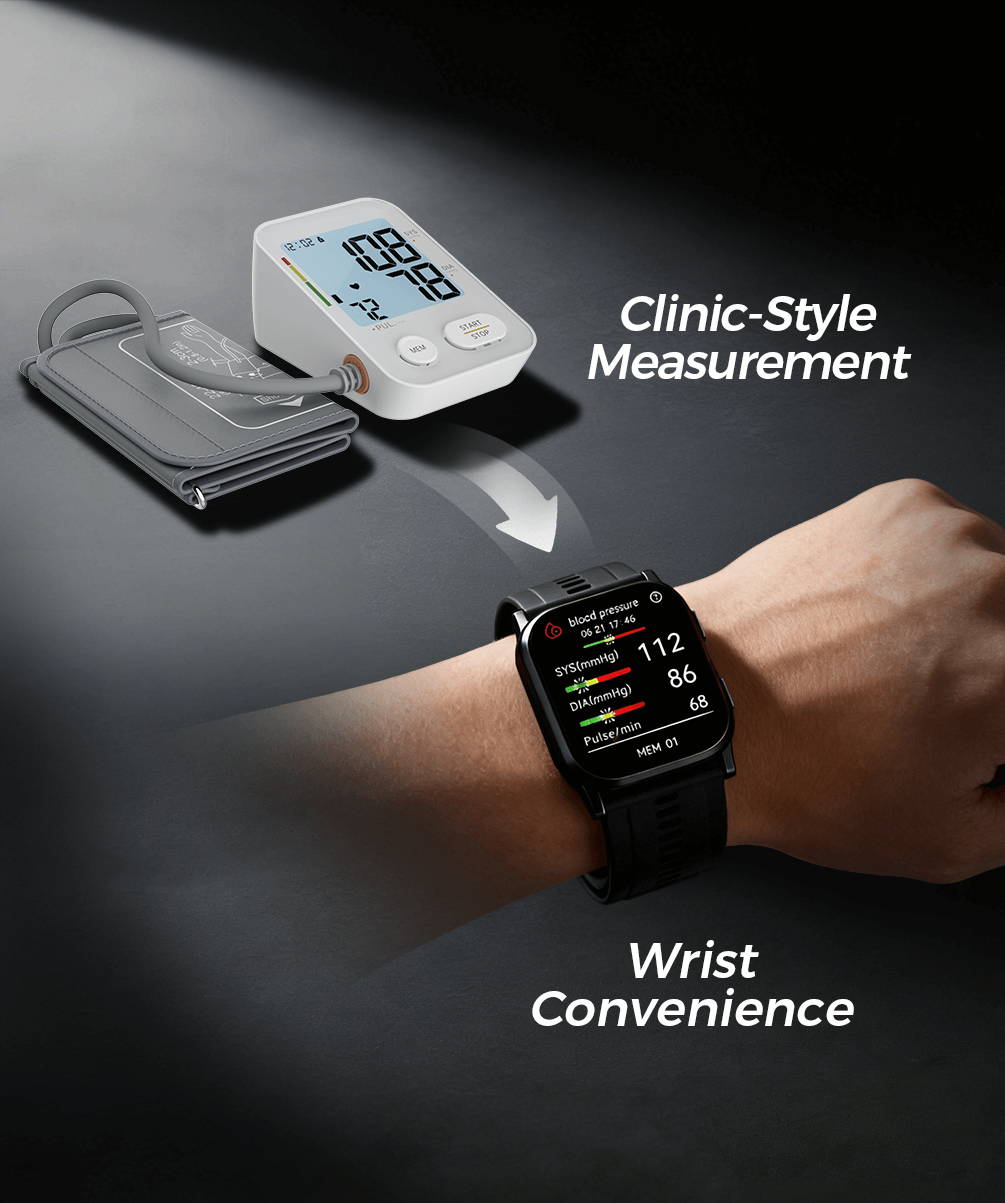
Some modern wrist blood pressure watches integrate a miniaturized aircuff, allowing oscillometric measurement in a wearable form factor.
This approach combines the measurement principle used in traditional blood pressure monitors with the convenience of a wrist-worn device.
Final Thoughts: Measurement Method and Regulatory Status Matter
So, can smartwatches measure blood pressure accurately?
Some can provide general estimates.
Some wearable devices apply pressure-based measurement methods similar to traditional monitors.
Others are designed strictly for wellness insights.
The most important factors to consider are:
- How the device measures blood pressure
- Whether it is intended for medical monitoring
- Whether regulatory clearance is documented
Understanding these differences empowers you to make a more informed decision, especially when accuracy and long-term monitoring matter.
Related Products
Related Products