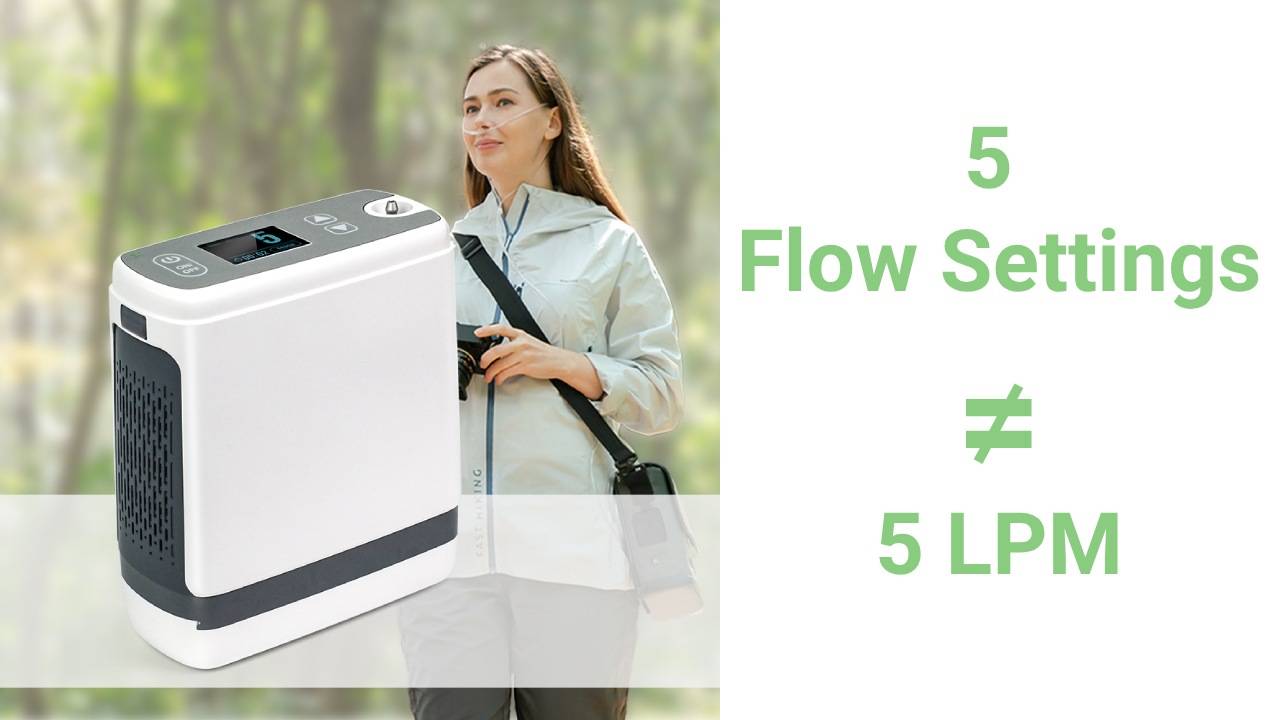
Why Portable Oxygen Uses Pulse Dose — Not Continuous Flow
Why Portable Oxygen Uses Pulse Dose
— Not Continuous Flow
When it comes to portable oxygen therapy, many devices — including the Wellue Mini Portable O₂ Concentrator — deliver oxygen using pulse dose (on‑demand) instead of continuous flow. But why is that? The answer lies in portability, efficiency, and user lifestyle.
What’s Pulse Dose vs Continuous Flow
- Pulse dose (also called demand or intermittent flow) delivers a burst of oxygen each time you inhale. The concentrator senses your breath and releases a fixed “bolus” of oxygen per breath.
- Continuous flow keeps oxygen flowing continuously — a steady stream measured in liters per minute (LPM) — regardless of whether you are inhaling or exhaling.
Why Pulse Dose Is Especially Suitable for Portable Use
1. Efficiency – less waste, longer battery life
Because oxygen is delivered only when you inhale, pulse dose avoids “wasted” oxygen during exhalation. This efficient delivery dramatically conserves both oxygen and battery power, making long use possible.
2. Compactness and lightweight design
Continuous flow systems need larger pumps, molecular sieves, and power components — which makes them heavy and bulky. In contrast, pulse‑dose portable concentrators can weigh as little as ~4 lb (≈1.8 kg) — small enough to carry like a water bottle. That makes them ideal for travel, outdoor activities, or daily mobility.
- That’s exactly the design philosophy behind the Wellue Portable O₂ Concentrator: it claims “bottle‑size portability” and “ultra‑light freedom.”
3. Adaptable for everyday activities
For users who lead an active lifestyle — walking, errands, commuting, light exercise, outdoor travel — oxygen demand fluctuates. Pulse dose adapts breath by breath, delivering oxygen only when needed, while allowing the user to stay mobile without heavy equipment.
4. Battery life and travel convenience
With continuous flow, oxygen supply and battery drain are constant — reducing portability and limiting use time. With pulse dose, devices like the Wellue Portable Oxygen Concentrator can last hours with a battery, enabling freedom of movement without being tied to a stationary oxygen source.
When Continuous Flow Still Makes Sense
That said — pulse dose is not perfect for every situation. Continuous flow remains important when:
- Oxygen needs are high or constant (e.g. during sleep, severe hypoxia, or when breathing is shallow). In these cases, a steady, reliable flow ensures adequate oxygen supply.
- Breathing is very irregular or too shallow for the concentrator’s sensor to reliably detect inhalation (so pulse‑delivery might not trigger properly).
Conclusion: Pulse Dose = Mobility + Efficiency
For a portable oxygen concentrator aimed at mobility, travel, and everyday use — such as the Wellue Mini — pulse dose delivery offers the best balance: efficient oxygen use, long battery life, compact size, and freedom of movement. Continuous flow remains the standard for high‑need or 24/7 oxygen users, but for many users who want convenience and portability, pulse dose is the reason why “portable oxygen” is practical.